
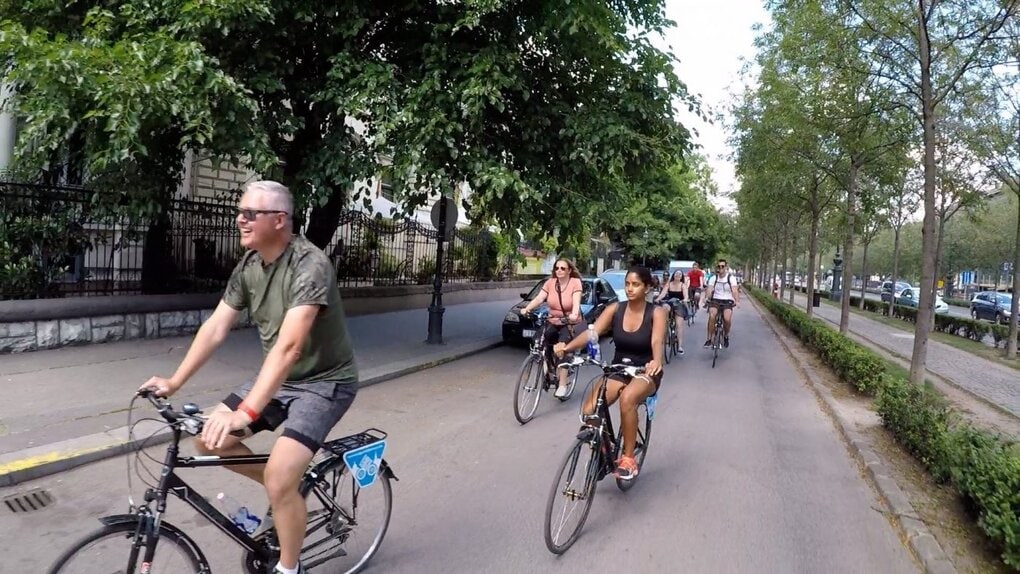
Following the European Parliament’s resolution on the creation of the EU Cycling Strategy, the European Commission is tasked with doubling the number of kilometers traveled by bicycle in Europe by 2030. With the resolution, the Parliament recognizes cycling as a full-fledged mode of transport and a key industry factor for achieving long-term climate goals and pollution-free production goals.
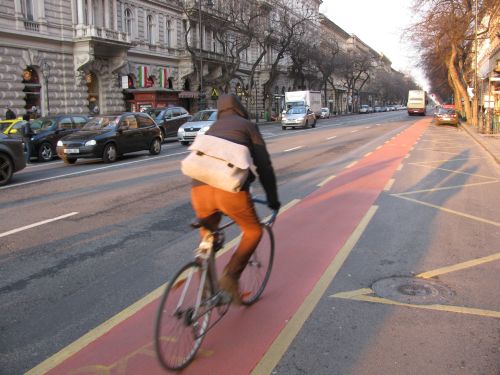
The resolution of the European Parliament, adopted almost unanimously in Strasbourg on February 16, 2023, envisages a 17-point action plan for the establishment of additional cycling infrastructure, the creation of favorable conditions for the production of bicycles, bicycle parts and bicycle batteries in Europe, and the creation of two million jobs in the “cycling ecosystem”. , which covers the manufacturing, tourism, retail, healthcare and sports industries, which already employ a million people today.
The cycling advocacy organisations, the European Cycling Federation (ECF), the European Cycling Industry Confederation (CIE), the European Bicycle Manufacturers Industry Association (CONEBI) and the European Bicycle Manufacturers Association (EBMA) welcomed the Parliament’s position with enthusiasm and congratulated the Committee on Transport and Tourism , that the resolution was brought under the roof at the initiative and under the direction of Karima Delli, Member of the European Parliament.

Member of the European Parliament Karima Delli said:
“Cycling has so many benefits: better health, less congestion, more livable cities, and more. However, until now there has been a lack of a strong signal from the EU institutions that recognizes the central role of cycling in our societies.”
According to Kevin Mayne, head of the European Cycling Industry Association, “This is a very important step for the coalition of associations, companies, cities, regions and governments supporting the European Parliament in adopting the resolution. From an industrial point of view, this is the most comprehensive acknowledgment of the importance of our sector by the EU institutions so far.”
Jill Warren of the European Cycling Federation sees it as
“This is a very important resolution that fulfills many years of advocacy and policy demands and is a key milestone for cycling. We congratulate the entire European Parliament for adopting the EU Cycling Strategy, which will open up new opportunities for cycling so that more people cycle – and cycle more safely – across Europe.”
Manuel Marsilio, head of the European Cycling Industry Association, added that
“The bicycle, e-bike, bicycle parts and accessories industries in Europe welcome the European Parliament’s decision for both the European Commission and the Member States to develop an EU Cycling Strategy: this is a historic call for the further growth of the entire industry and clearly designates the central role of the industry in the mobility ecosystem of the EU industrial strategy.”
In their welcoming statements, cycling organisations, ECF, CIE, CONEBI and EBMA, call on the European Commission to act swiftly to implement a long list of policy recommendations set out by the European Parliament.
Cycling organizations also hope that the proposal to make 2024 the European Year of Cycling, which is already supported by several EU member states in the European Cycling Declaration, will encourage the member states to take further measures, for example to reduce VAT, to multiply initiatives aimed at promoting cycling, and to replicate the “Portugál Kerékpáros Völgy” as an industrial investment in other regions, with the help of targeted subsidies from European funding programs.

It is not legally binding, but it is a key document
The European Parliament’s resolution on the development of the EU strategy for cycling is not legally binding, but it is a key document in terms of shaping future policy priorities and decisions, which the Parliament can hold the European Commission accountable for. The Statement calls for a series of concrete measures to enable cycling and increase the number of kilometers traveled by bicycle, such as:
The level of investments for the development of safe, separated cycling infrastructure and the integration of cycling into urban frameworks must be significantly increased.
Cycling must be taken into account when developing or upgrading infrastructure belonging to the Trans-European Transport Network (TEN-T)
The cycling industry should be included in the mobility ecosystem of the EU industrial strategy
“Made in Europe” bicycles and others should be supported
Source: ecf.com

